Parallettes For Beginners
If you want to get stronger, fitter, and improve your body control, parallettes are a great tool to start with. These simple bars can help you build impressive strength using only your bodyweight. But many beginners feel unsure about where to start, what exercises to do, or how to avoid injury.
This article will give you a clear, practical guide to using parallettes, even if you have never tried them before. Whether you want to learn basic moves, understand proper technique, or avoid common mistakes, you will find everything you need here to begin your parallettes journey with confidence.
What Are Parallettes?
Parallettes are small, portable bars that sit low to the ground. They are usually made from metal, wood, or strong plastic. The main purpose of parallettes is to help you perform bodyweight exercises with better form and less wrist strain. Unlike push-up handles, parallettes are longer and allow for a bigger range of movements.
For beginners, parallettes make exercises like push-ups, L-sits, and dips much safer and more comfortable. Many people start with parallettes because they want to practice calisthenics or gymnastic skills, but you do not need any gymnastics experience to benefit from them.
Why Use Parallettes?
Starting with parallettes has many advantages:
- Less stress on wrists: The neutral grip keeps your wrists straight, which reduces pain and risk of injury.
- Better range of motion: You can go lower in push-ups and dips, building more strength.
- Improved balance and core stability: Many moves on parallettes require you to stabilize your body, which activates more muscles.
- Portable and affordable: Parallettes are small enough to use at home or bring to the park, and basic sets are not expensive.
- Safe progressions: You can start with easy exercises and move to harder ones as you get stronger.
Many beginners overlook the wrist protection benefit. Doing push-ups on the floor can cause soreness or even injury, especially for those with stiff wrists. Parallettes fix this problem by letting you keep your wrists straight.
Choosing Your First Parallettes
When buying your first pair, focus on these key factors:
1. Material
- Wood: Feels warm and comfortable in the hands. Good grip, even with sweaty palms.
- Metal: Very strong and durable. Can be cold or slippery if not coated.
- Plastic: Lightweight and affordable, but sometimes less stable for heavy users.
2. Height And Length
Beginners should choose bars about 10–12 inches high and 16–24 inches long. This size is perfect for most exercises and easy to carry.
3. Base Stability
Look for parallettes with a wide base or rubber feet. Unstable bars can tip over, increasing your injury risk.
4. Weight Capacity
Check the maximum load. Most quality parallettes can support at least 250–300 pounds.
5. Price
Affordable sets start around $30–$50, while higher-end models can cost over $100. You do not need the most expensive option to get started.
Here is a quick comparison of popular parallettes materials:
| Material | Grip Comfort | Durability | Price Range |
|---|---|---|---|
| Wood | Excellent | High | $$ |
| Metal | Good | Very High | $$$ |
| Plastic | Fair | Medium | $ |
Many beginners buy the cheapest set. But a slightly better set (especially wood) feels nicer and lasts longer.
Basic Parallettes Exercises For Beginners
You do not need advanced skills to start. Here are six simple exercises to build strength and confidence:
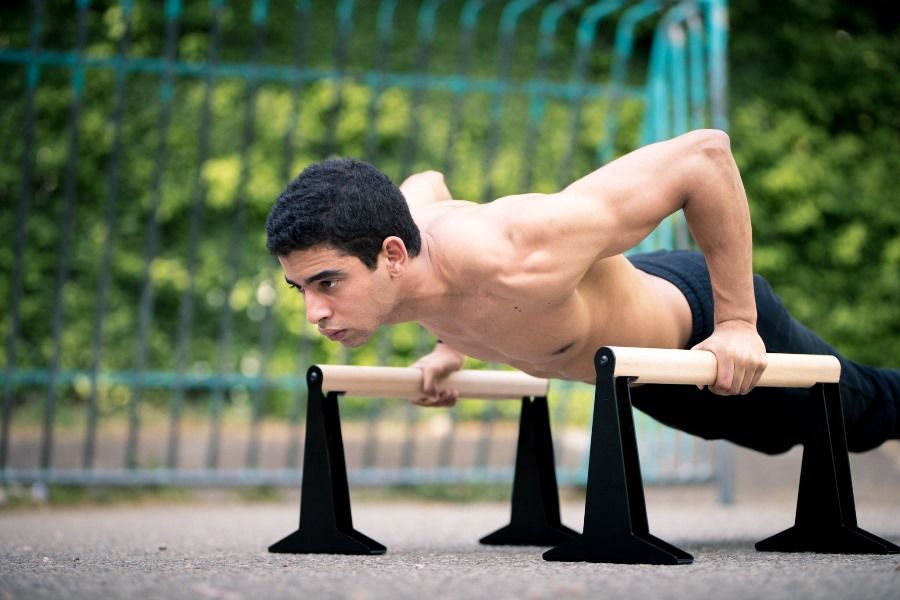
1. Parallette Push-ups
Place your hands on the bars, keep your body straight, lower your chest between the bars, and push up. You can go deeper than normal push-ups, which works your chest and shoulders more.
2. L-sit Hold
Sit between the bars, grip them, and lift your legs off the ground, keeping them straight. Start with bent knees if needed. This builds core and hip flexor strength.
3. Tuck Sit
Similar to the L-sit, but keep your knees bent and close to your chest. This is easier for beginners and improves balance.
4. Parallette Dips
Place the bars behind you, grip them, and lower your body by bending your elbows. Press back up. This works your triceps and shoulders.
5. Knee Raises
Hang between the bars, arms locked, and lift your knees up toward your chest. This targets your abs.
6. Elevated Plank
Hold a plank position with hands on the parallettes. This reduces wrist pain and strengthens your core.
Do not rush to harder moves. Mastering these basics gives you a strong foundation.

Credit: www.youtube.com
Proper Form And Safety Tips
Many beginners make mistakes that lead to pain or injury. Here is how to practice safely:
- Warm up your wrists and shoulders before each session.
- Keep your shoulders down and back to protect your joints.
- Do not let your lower back sag in push-ups or planks.
- Use a firm grip, but do not squeeze too hard.
- Start with short sets (5–10 reps or 10–20 seconds for holds).
- Stop if you feel sharp pain.
One mistake beginners make is locking their elbows too hard during holds. Keep a small bend in your arms to avoid strain.
Sample Parallettes Beginner Workout
Here is a simple routine to try 2–3 times per week:
- Parallette Push-Ups: 3 sets of 8–12 reps
- Tuck Sit Hold: 3 sets of 10–20 seconds
- Parallette Dips: 3 sets of 6–10 reps
- Knee Raises: 3 sets of 8–12 reps
- Elevated Plank: 3 sets of 20–30 seconds
Rest 60–90 seconds between sets. If you cannot finish all reps, just do your best and build up slowly.
How To Progress With Parallettes
As you get stronger, you can try harder exercises:
- Straight-leg L-sit: Hold your legs out straight instead of bent.
- Decline push-ups: Put your feet up on a bench for more chest and shoulder work.
- Advanced dips: Add weight with a backpack or slow down the movement.
- Tuck planche: Lean forward and lift your feet off the ground, balancing on your hands.
You can also increase sets, reps, or hold times. But always focus on perfect form, not just numbers.
| Exercise | Beginner Progression | Advanced Variation |
|---|---|---|
| Push-Up | Standard Depth | Deep Push-Up, Decline Push-Up |
| L-Sit | Tuck Sit | Straight-Leg L-Sit |
| Dip | Bodyweight Only | Weighted Dip |
Common Beginner Mistakes
Avoid these problems for better results:
- Skipping the basics: Many try advanced moves too soon and get injured.
- Ignoring wrist warm-ups: Tight wrists can hurt your progress.
- Letting form break down: Quality is more important than doing more reps.
- Not using parallettes on a flat surface: Uneven floors can make the bars tip.
- Neglecting rest: Your muscles and joints need time to recover.
A less obvious mistake is not cleaning your parallettes. Dust, sweat, and moisture can make them slippery or damage the material over time.
How Parallettes Compare To Other Equipment
You might wonder if parallettes are better than other tools like push-up handles or gymnastic rings. Here is a quick comparison:
| Equipment | Best For | Beginner-Friendly | Portability |
|---|---|---|---|
| Parallettes | Push-ups, L-sits, Dips, Core | Yes | High |
| Push-Up Handles | Basic Push-Ups | Yes | High |
| Gymnastic Rings | Pull-Ups, Dips, Advanced Moves | No | Medium |
Parallettes are a smart choice for most beginners because you can do many exercises safely and easily. Rings are great for advanced users but harder to control at first.
Practical Tips For Faster Progress
- Practice consistently. Two or three short sessions a week are better than one long session.
- Use a mirror or record yourself to check your form.
- Work on grip strength with short holds, even outside your main workout.
- If you feel stuck, slow down each rep or add a pause at the hardest part of the move.
- Ask for feedback from a more experienced friend or trainer.
Many beginners do not realize how much core strength matters for parallettes. Training your abs and lower back with planks and hollow holds will help you progress faster.

Credit: www.youtube.com
Who Should Not Use Parallettes?
Parallettes are safe for most people, but you should be careful if:
- You have a recent wrist, elbow, or shoulder injury
- You have severe joint pain
- You are pregnant (talk to your doctor first)
If you are unsure, ask a medical professional before starting.
Where To Learn More
If you want to see more demonstrations, many calisthenics coaches post helpful videos online. For official guides and standards, check resources like the Wikipedia page on Parallettes.
Credit: www.pullup-dip.com
Frequently Asked Questions
What Muscles Do Parallettes Work?
Parallettes mainly target your chest, shoulders, triceps, abs, and hip flexors. Many moves also work your grip and back muscles.
How Often Should Beginners Use Parallettes?
Start with 2–3 times per week. Give your body at least one day of rest between sessions to recover.
Can I Use Parallettes If I Have Weak Wrists?
Yes! Parallettes actually help protect weak wrists because they keep your hands in a neutral position. But always warm up and stop if you feel pain.
Do I Need To Go To A Gym To Use Parallettes?
No. Parallettes are perfect for home use. You only need a small, flat space—like your living room or backyard.
How Long Does It Take To See Results?
Most beginners notice stronger arms and core after 3–4 weeks of regular practice. Better balance and harder moves will take more time, but progress is steady with consistent effort.
Parallettes can transform your body and fitness in simple, effective ways. Start slow, stay consistent, and enjoy every new skill you unlock!