Developing a strong grip is much more than just being able to hold onto a heavy object. Whether you are an athlete, a fitness enthusiast, or someone who wants to make daily tasks easier, grip strength exercises can be life-changing. Many people overlook grip training, but it’s a key factor for lifting weights, playing sports, improving hand health, and even preventing injuries. In fact, research suggests that grip strength is linked to overall health and longevity. This guide explores the most effective exercises, explains why grip matters, and gives you practical advice to build powerful hands and forearms.
Why Grip Strength Matters
Your hands are involved in almost everything you do—carrying groceries, opening jars, shaking hands, or typing on a keyboard. But grip strength is about more than daily tasks. Athletes need it for better performance, and older adults benefit because it helps prevent falls and maintain independence. Studies show a direct link between strong grip and longer life expectancy. People with weak grip are more likely to experience health problems as they age.
A strong grip also reduces your risk of injuries. For example, in weightlifting, the ability to hold a bar securely can prevent slips and accidents. In climbing, tennis, golf, or martial arts, superior grip can make the difference between winning and losing.
Types Of Grip Strength
Before diving into exercises, it helps to know the three main types of grip strength:
- Crush Grip: The force your hand can apply when you squeeze something, like a handshake or crushing a can.
- Pinch Grip: Using your fingers and thumb to hold an object, like holding a plate or pinching a book.
- Support Grip: Holding onto something for a long time, such as carrying shopping bags or hanging from a pull-up bar.
The best grip strength exercises will target all three areas for balanced hand and forearm development.

Credit: www.onepeloton.com
Top Grip Strength Exercises
Let’s explore the most effective exercises to build a strong grip. These movements use minimal equipment, so you can get started almost anywhere.
1. Farmer’s Walk
Pick up a pair of heavy dumbbells or kettlebells, one in each hand. Stand tall, shoulders back, and walk forward for a set distance or time. This exercise trains your support grip and works your shoulders, core, and legs.
- How to do it: Grab heavy weights, keep arms straight, and walk 20–40 meters.
- Tip: Focus on squeezing the handles tightly. Increase the weight as you get stronger.
2. Dead Hang
Find a pull-up bar. Hang from it using both hands, arms fully extended, and feet off the ground. This is one of the simplest ways to build support grip and improve shoulder stability.
- How to do it: Hang for 20–60 seconds per set.
- Tip: If you find it easy, try using one hand at a time.
3. Plate Pinch
Hold two weight plates together (smooth sides out) between your thumb and fingers. Stand upright and hold for as long as possible. This exercise targets your pinch grip.
- How to do it: Start with lighter plates (e.g., two 2.5 kg plates in each hand).
- Tip: Increase the weight or duration over time.
4. Towel Pull-ups
Drape a towel over a pull-up bar, grip the ends, and perform pull-ups. The towel’s thickness and instability force you to squeeze harder, building crush and support grip.
- How to do it: Do as many pull-ups as you can.
- Tip: If pull-ups are too hard, just hang from the towel.
5. Hand Grippers
Special hand grippers are designed to be squeezed repeatedly. They are portable and great for building crush grip.
- How to do it: Squeeze the gripper as many times as possible per set.
- Tip: Use a gripper with adjustable resistance for progress.
6. Wrist Roller
A wrist roller is a stick with a rope and a weight attached. Rolling the weight up and down works your forearms and grip.
- How to do it: Hold the stick at shoulder height and roll the weight up and down.
- Tip: Use both hands for control.
7. Plate Curls
Hold a weight plate by the rim and perform curls. This targets your fingers, wrists, and forearms together.
- How to do it: Curl the plate up toward your shoulder, then lower.
- Tip: Keep your wrist straight for safety.
8. Rice Bucket Exercises
Fill a bucket with uncooked rice. Bury your hand inside and open/close your fist, twist, or dig. This trains all parts of the hand.
- How to do it: Use for 2–3 minutes per hand.
- Tip: Try different motions for a full workout.
9. Sledgehammer Levering
Hold a sledgehammer by the handle, arm extended, and tilt the hammer up and down using your wrist. This is a classic way to train wrist and forearm strength.
- How to do it: Start with a light hammer and increase gradually.
- Tip: Keep movements slow and controlled.
10. Thick Bar Training
Use bars or handles that are thicker than usual. This forces your hands and fingers to work harder.
- How to do it: Wrap a towel or buy thick grips for dumbbells.
- Tip: Use for curls, rows, or deadlifts.
11. Finger Extensions
Many people forget to train the muscles that open the hand. Use rubber bands or a special finger extension device to stretch your fingers outward.
- How to do it: Place a rubber band around your fingers and open your hand against resistance.
- Tip: This helps balance hand strength and prevent injuries.
12. Hex Dumbbell Holds
Stand a hexagonal dumbbell on end. Pick it up by the head and hold it for time. This is a great pinch grip builder.
- How to do it: Hold for 20–40 seconds per set.
- Tip: Try to increase hold time each week.
13. Reverse Curls
This classic move uses a barbell or dumbbells with palms facing down (overhand grip). It targets the brachioradialis and strengthens the wrists.
- How to do it: Curl the weight up, keeping your wrists straight.
- Tip: Use moderate weight to avoid strain.
14. Captains Of Crush Challenge
Captains of Crush grippers are known for their difficulty. Try to close a gripper for reps, or even hold it shut for time.
- How to do it: Use the right resistance level for your strength.
- Tip: These are very tough—don’t get discouraged.
15. Rolling Thunder
This is a thick, rotating handle attached to a weight. It’s a favorite among grip sport athletes.
- How to do it: Lift the handle with one hand for maximum weight or hold for time.
- Tip: Start light and focus on form.
How Often Should You Train Grip?
Training grip strength 2–3 times per week is enough for most people. Since your hands are used in many daily activities, recovery is important. Overtraining can cause pain or even injury. Listen to your body—if your hands or forearms feel very sore, take extra rest.
You can add 1–2 grip exercises at the end of your regular workout or dedicate a short session just for grip.
Common Mistakes In Grip Training
Many beginners make similar mistakes when starting grip strength exercises. Here are some to avoid:
- Doing too much, too soon: Your hands are small muscles and tire easily. Increase volume slowly.
- Ignoring recovery: Hands need rest, just like other muscles.
- Only training one type of grip: For balanced strength, target crush, pinch, and support.
- Poor form: Swinging weights or using momentum reduces effectiveness and can cause injury.
Another mistake is neglecting the extensor muscles. If you only squeeze, your hands become unbalanced and prone to injury. Always include finger extension work.
Sample Weekly Grip Strength Plan
Here’s a simple plan for beginners. You can adjust the exercises and intensity as you get stronger.
| Day | Exercise | Sets | Reps/Time |
|---|---|---|---|
| Monday | Farmer’s Walk | 3 | 30 seconds |
| Wednesday | Dead Hang | 3 | 40 seconds |
| Friday | Plate Pinch | 3 | 20 seconds |
You can add finger extensions at the end of each session for balance.
Equipment For Grip Strength Training
While some exercises use your own body weight, there are tools that can help:
- Hand grippers
- Thick grip adapters
- Wrist rollers
- Sledgehammers
- Resistance bands
- Buckets (for rice bucket exercises)
Most gyms have enough equipment for basic grip training, but you can also improvise at home.
How Grip Strength Improves Performance
Improved grip strength doesn’t just help in the gym. Here are some examples:
| Sport/Activity | Grip Benefit |
|---|---|
| Weightlifting | Hold heavier weights safely |
| Climbing | Better hold on rocks and holds |
| Golf/Tennis | Stronger, more controlled swing |
| Jiu-Jitsu/Wrestling | Better grips for throws and holds |
| Daily Life | Open jars, carry bags, prevent falls |
A strong grip can also make tasks like gardening, playing musical instruments, or even typing easier and less tiring.
Two Advanced Insights Most Beginners Miss
- Grip is often the weak link: Many people find their grip fails before the main muscles in lifts like deadlifts or pull-ups. Improving grip can immediately boost performance in these moves.
- Grip endurance matters, not just max strength: Being able to hold something heavy for a long time is just as important as squeezing hard once. Support grip training (like hangs or carries) is vital for real-world strength.
When To Expect Results
Most people notice improvement in grip strength within 4–6 weeks of regular practice. Gains are often quick at first, then progress slows. Consistency and variety are key—try different exercises and keep challenging yourself.

Credit: www.nerdfitness.com
Safety And Injury Prevention
Hand and forearm injuries can be slow to heal. To stay safe:
- Warm up your hands before heavy training.
- Stretch fingers and wrists after workouts.
- Don’t ignore pain; stop if something feels wrong.
- Train both grip and finger extension for balance.
If you have a history of hand injuries or medical conditions (like arthritis), talk to a doctor or physiotherapist before starting.
Frequently Asked Questions
What Is The Best Grip Strength Exercise For Beginners?
The farmer’s walk is a great starting point. It’s simple and works your whole body. Just pick up weights and walk. Dead hangs from a pull-up bar are also easy and effective.
How Long Does It Take To Improve Grip Strength?
Most people see results within 4–6 weeks if they train 2–3 times per week. Progress is fastest in the first month.
Can Grip Strength Help Prevent Injuries?
Yes. Strong grip protects your hands and wrists, and reduces the risk of dropping weights or falling. It’s also important for older adults to prevent loss of function.
Do I Need Special Equipment To Train Grip Strength?
No, many exercises can be done with basic weights or even just your body weight. However, tools like hand grippers and wrist rollers can add variety and challenge.
Is Grip Strength Linked To Overall Health?
Research shows a strong connection between grip strength and overall health. It’s even used as a marker for aging and disease risk. For more details, see this research article.
Building better grip strength is simple, practical, and pays off in every part of life. With the exercises and tips here, you can start today and see real results within weeks. Just remember to train smart, stay consistent, and your hands will soon be stronger than ever.
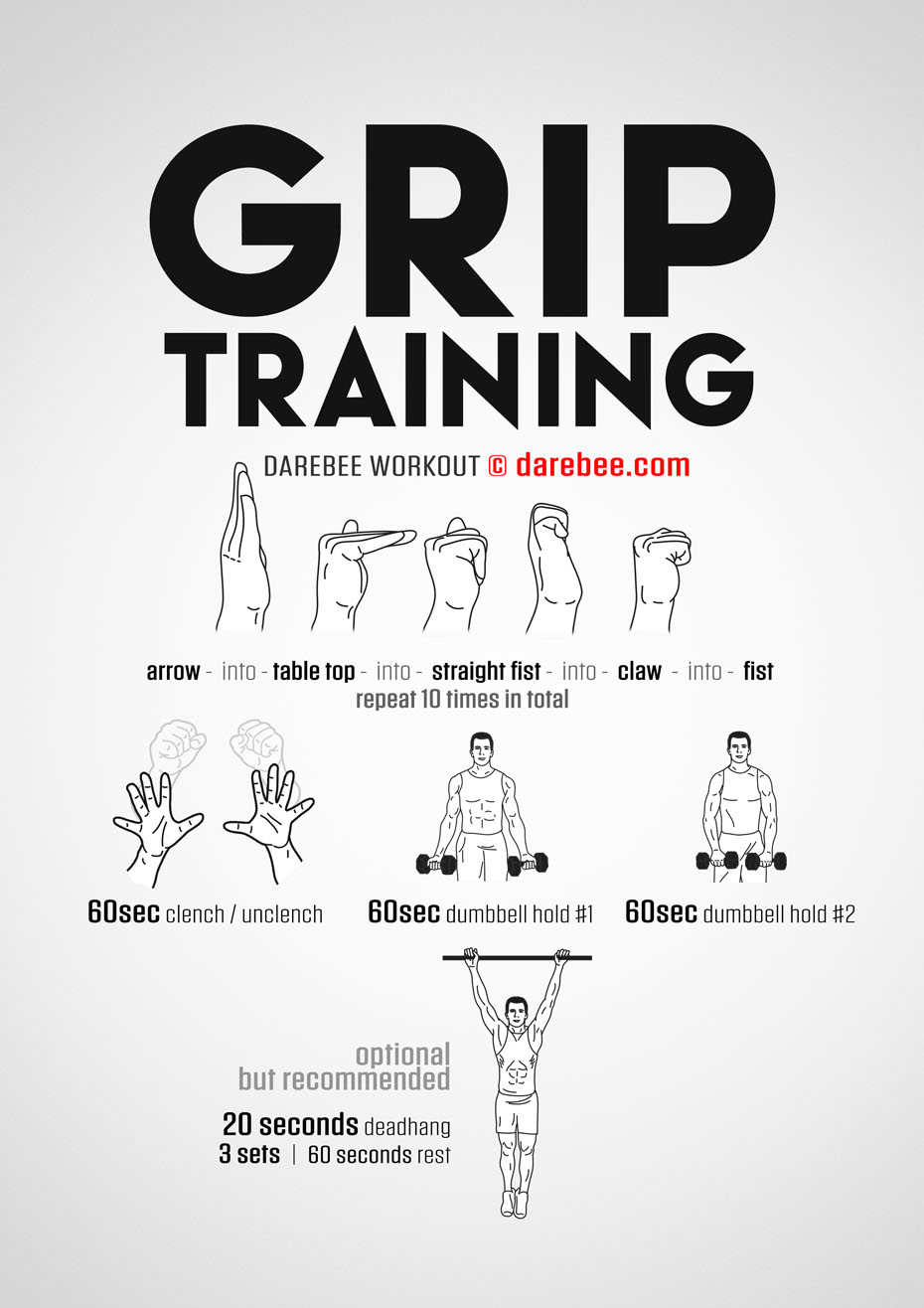
Credit: darebee.com