Tension Rope Workout: Complete Guide For Building Strength Anywhere
If you’re looking for a workout that’s simple, portable, and effective, a tension rope workout might surprise you. With just a resistance rope (sometimes called a resistance band or tube), you can exercise almost every muscle in your body. These ropes are light, easy to carry, and can be used at home, in the park, or while traveling. But there’s more to tension rope workouts than convenience. Used correctly, they help build strength, improve flexibility, and support injury recovery. In this guide, you’ll learn how to get started, what makes this workout unique, and how to create a routine that fits your goals.
What Is A Tension Rope Workout?
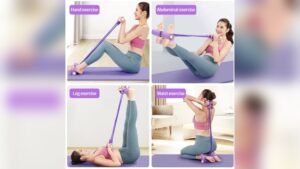
A tension rope workout is a series of exercises using elastic bands or tubes. These ropes create resistance when you stretch them, making your muscles work harder. Unlike lifting weights, the tension increases as you pull the rope further, which provides a unique kind of challenge.
Tension ropes come in different strengths, from light to heavy. Some have handles, while others are plain bands. The exercises can target your arms, chest, back, legs, and even your core. Physical therapists often use tension ropes for safe strength training, but many athletes use them for warm-ups, muscle building, and flexibility.
Why Choose Tension Rope Workouts?
People often ask, “Are tension ropes really as good as weights or gym machines?” The answer: they’re different, but very effective.
- Versatility: You can do upper body, lower body, and core exercises—all with one tool.
- Portability: A tension rope fits in your bag or suitcase.
- Low Impact: Easier on your joints than some free weights or machines.
- Progressive Resistance: The further you stretch, the harder it gets, which helps build muscle control.
- Cost-Effective: Tension ropes are affordable and last a long time.
Some studies show that tension rope training can increase strength and muscle size. For beginners, they offer a safer way to start. For advanced users, they add variety and challenge to regular routines.

Credit: www.amazon.co.uk
Types Of Tension Ropes
Not all tension ropes are the same. Here are the main types:
| Type | Material | Best For |
|---|---|---|
| Flat Bands | Latex/Rubber Sheet | Physical therapy, stretching |
| Tubular Bands | Hollow Rubber Tube | Strength training, general fitness |
| Loop Bands | Continuous Loop | Leg and glute exercises |
| Figure-8 Bands | Shaped Tube with Handles | Upper body exercises |
Non-obvious insight: The type you choose affects exercise variety. For example, loop bands are great for squats and glute bridges, while tubular bands with handles offer a better grip for chest and back moves.
How Tension Rope Resistance Compares To Weights
Many wonder if resistance ropes can really replace dumbbells or barbells. The truth is, both have strengths and weaknesses.
| Feature | Tension Rope | Weights |
|---|---|---|
| Portability | High | Low |
| Variable Resistance | Yes (increases as stretched) | Constant |
| Risk of Injury | Lower | Higher (if form is poor) |
| Muscle Building | Moderate to High | High |
| Cost | Low | Medium to High |
Key takeaway: Tension ropes offer variable resistance, which means the hardest part of the move is usually at the end of the stretch. Weights provide constant resistance. Both methods can build muscle, but tension ropes are safer for beginners and those with joint issues.

Credit: www.youtube.com
Essential Tension Rope Exercises
To build a balanced body, focus on multi-joint (compound) movements. Here are some of the most effective tension rope exercises:
- Squat with Overhead Press
- Works: Legs, glutes, shoulders, arms.
- Stand on the rope, hold handles at your shoulders, squat down, then stand and press your hands overhead.
- Standing Row
- Works: Upper back, biceps.
- Anchor rope at the door or a heavy object, pull handles toward your chest, elbows back.
- Chest Press
- Works: Chest, triceps.
- Anchor rope behind you, press handles forward at chest height.
- Deadlift
- Works: Legs, glutes, lower back.
- Stand on the rope, hinge forward at the hips, grab the handles, and stand up straight.
- Lateral Raise
- Works: Shoulders.
- Stand on a rope, raise arms to the sides, keeping elbows slightly bent.
- Biceps Curl
- Works: Biceps.
- Stand on a rope, curl handles up to your shoulders.
- Triceps Extension
- Works: Triceps.
- Anchor rope overhead, pull handles down, keeping elbows close.
- Standing Ab Twist
- Works: Obliques, core.
- Hold both handles, keep arms straight, twist torso side to side.
- Glute Bridge with Band
- Works: Glutes, hamstrings.
- Place a loop band above the knees, lie on your back, and lift your hips.
- Seated Row
- Works: Back, biceps.
- Sit with legs extended, wrap the band around your feet, and pull the handles toward your waist.
Pro tip: For muscle growth, choose a tension rope that feels challenging for 8-15 reps. If you can do more than 15 reps easily, try a heavier band.
Creating A Tension Rope Workout Routine
A good routine balances all major muscle groups and fits your fitness level. Here’s how to design a simple, effective plan:
- Frequency: 2–4 times per week
- Duration: 30–45 minutes per session
- Structure: Full-body (for beginners), or split (upper/lower) for advanced
Sample full-body routine:
- Squat with Overhead Press – 3 sets x 10 reps
- Standing Row – 3 sets x 12 reps
- Chest Press – 3 sets x 12 reps
- Deadlift – 3 sets x 10 reps
- Lateral Raise – 2 sets x 12 reps
- Glute Bridge with Band – 2 sets x 15 reps
- Standing Ab Twist – 2 sets x 15 reps (each side)
Rest 45–60 seconds between sets. Warm up before starting and cool down at the end.
Non-obvious insight: Changing your hand or foot position on the rope changes the resistance. For example, standing wider on the band makes squats harder without needing a heavier band.
Advanced Techniques And Progressions
If you want to keep making progress, try these advanced ideas:
- Slow Down Reps: Take 3 seconds to lift, 3 seconds to lower. This increases time under tension.
- Add Pulses: At the hardest part of the move, pulse up and down for 5–10 seconds.
- Combine Moves: Do a squat with a row or a lunge with a curl to work more muscles.
- Increase Resistance: Use a heavier rope or double up bands.
- Change Angles: Anchor the rope at different heights for new challenges.
Common mistake: Not checking the rope for wear and tear. A snapped band can cause injury. Always inspect your equipment before each workout.
Safety Tips For Tension Rope Workouts
While tension ropes are safer than many tools, follow these tips:
- Check Anchors: Make sure the band is secure before pulling.
- Maintain Good Form: Don’t let your back round during rows or deadlifts.
- Start Light: Begin with a lighter band if you’re new.
- Wear Shoes: Prevent slipping, especially if standing on the rope.
- Avoid Sudden Releases: Always return to the starting position with control.
If you have joint pain or a medical condition, talk to a health professional before starting.
Who Should Use Tension Rope Workouts?
Tension rope workouts are great for:
- Beginners: Learn proper movement before adding heavy weights.
- Busy People: Short, effective routines that fit any schedule.
- Travelers: Bands fit in your suitcase or backpack.
- Older Adults: Low impact, easy on joints.
- Rehab Patients: Used in physical therapy for safe muscle activation.
Example: Many pro athletes use resistance bands for warm-ups and muscle activation before games, not just for strength.
Comparing Popular Tension Rope Brands
Quality matters. Here’s a quick look at common brands:
| Brand | Price (USD) | Durability | Special Features |
|---|---|---|---|
| TheraBand | 15–35 | High | Color-coded resistance |
| Fit Simplify | 12–25 | Medium | Loop bands, affordable |
| Bodylastics | 40–90 | Very high | Anti-snap design |
| Black Mountain | 25–60 | High | Multiple handle options |
Tip: Choose a set with at least three different resistance levels. This will help you progress as you get stronger.
Real-life Results: What To Expect
Many studies and user reports show that tension rope workouts can:
- Increase strength by 10–20% in 6–12 weeks (if done regularly)
- Improve joint flexibility and balance
- Support weight loss when combined with healthy eating
- Help with injury recovery (shoulder, knee, back)
But results depend on consistency, intensity, and good form. Tension rope training is not magic—it takes effort. Still, it’s one of the most time-efficient ways to build muscle and stay active.
Common Mistakes To Avoid
Even simple workouts can go wrong if you’re not careful. Watch out for:
- Letting the band go slack: Keep tension during the whole movement.
- Poor posture: Stand tall, shoulders back.
- Wrong resistance: Too heavy can hurt, too light won’t build muscle.
- Not progressing: Increase resistance or reps over time.
- Skipping warm-up/cool-down: Increases injury risk.
Practical example: If you’re doing a row, don’t lean back or use your body’s momentum—use your back and arm muscles.
Where To Learn More
If you want detailed exercise videos or more routines, check out the Wikipedia page on resistance bands for history, safety, and more advanced uses.
Frequently Asked Questions
How Often Should I Do Tension Rope Workouts?
Aim for 2–4 sessions per week. Beginners can start with full-body routines twice a week. As you get stronger, add more sessions or split your routine into upper and lower body days.
Can Tension Ropes Help Build Muscle Like Weights?
Yes, especially if you use enough resistance and work near your limit. Tension ropes can build muscle and strength, but you need to keep challenging your muscles by increasing resistance or reps.
Are Tension Ropes Safe For People With Joint Problems?
Usually, yes. Tension ropes are low-impact and gentle on joints. However, always use the correct form and consult a doctor or physical therapist if you have injuries or chronic pain.
What Should I Look For When Buying A Tension Rope?
Choose quality materials (like natural latex), a set with multiple resistance levels, and comfortable handles. Make sure the brand has good reviews and offers safety features, like anti-snap technology.
Can I Use Tension Ropes For Cardio Workouts?
Absolutely. By doing fast-paced moves like band jacks, mountain climbers, or quick squats with the rope, you can raise your heart rate and burn calories. Combine resistance and cardio for best results.
Getting fit doesn’t require a gym membership or heavy equipment. With a tension rope, you can work every muscle, anywhere. Whether you’re a beginner or an athlete, this simple tool offers big results if you use it right. Try adding tension rope workouts to your routine and feel the difference in your strength, mobility, and confidence.

Credit: corsairlog.com