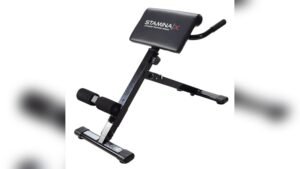
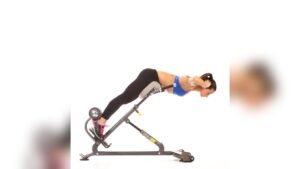
If you want to strengthen your lower back, glutes, and hamstrings, you might have seen a piece of equipment called the hyperextension bench at your gym. This tool, sometimes called a Roman chair, is more than just a back machine—it’s a versatile platform for building core strength, improving posture, and even preventing injuries. Many people use it only for basic back extensions, but there’s a lot more you can do. In this article, you’ll discover effective hyperextension bench exercises, learn how to do them correctly, and understand how to fit them into your workout routine.
What Is A Hyperextension Bench?
A hyperextension bench is a sturdy piece of gym equipment designed to let you perform controlled bending and straightening of your back and hips. Most benches have angled pads for your hips and adjustable foot rests for stability. The main purpose is to isolate muscles along your posterior chain—the muscles along the back side of your body, like the lower back, glutes, and hamstrings.
Many people think the bench is only for advanced lifters or for people with back pain. In reality, almost anyone can use it, from beginners to athletes, if they learn proper form.
Benefits Of Hyperextension Bench Exercises
Using a hyperextension bench offers several unique benefits that many gym-goers miss:
- Targeted Muscle Strengthening: These exercises focus on the erector spinae (lower back), gluteus maximus, and hamstrings. This helps create a balanced, injury-resistant body.
- Improved Posture: Strengthening the lower back and core helps you stand tall and reduce the risk of slumping, which is common with desk jobs.
- Injury Prevention: A strong posterior chain protects your spine and hips. Athletes use hyperextension exercises to avoid common injuries in sports like football, running, and weightlifting.
- Better Athletic Performance: Stronger glutes and hamstrings improve sprint speed and jumping ability.
- Rehabilitation Use: Physical therapists often include hyperextensions in recovery programs for lower back injuries.
A surprising benefit: Regular use can help reduce chronic back pain for some people, as long as exercises are done with the correct technique.
Key Muscles Worked
Hyperextension bench exercises mainly target:
- Erector Spinae (lower back muscles)
- Gluteus Maximus (buttocks)
- Hamstrings (back of thigh)
- Core Muscles (abs and obliques, especially with certain variations)
Some variations also involve the adductors (inner thigh), calves, and even the upper back if you add weights or change your arm position.
Essential Hyperextension Bench Exercises
Let’s explore the most effective exercises you can do on a hyperextension bench. For each one, you’ll find instructions, tips, and common mistakes to avoid.
1. Standard Back Extension
This is the classic move most people know. It’s simple but very effective for building lower back strength.
How to do it:
- Adjust the bench so the top of the pad sits just below your hip bones.
- Lock your feet under the foot pads.
- Cross your arms over your chest or place hands behind your head.
- Keep your back straight and bend forward at the hips until your upper body is almost perpendicular to the floor.
- Raise your body back to the starting position using your lower back and glutes.
Tips:
Move slowly. Do not overextend your back at the top. Stop when your body forms a straight line.
Common mistake:
Don’t swing up quickly or use momentum. This reduces effectiveness and increases injury risk.
2. Weighted Hyperextension
Once you can do 15–20 bodyweight reps, adding weight helps you build more strength.
How to do it:
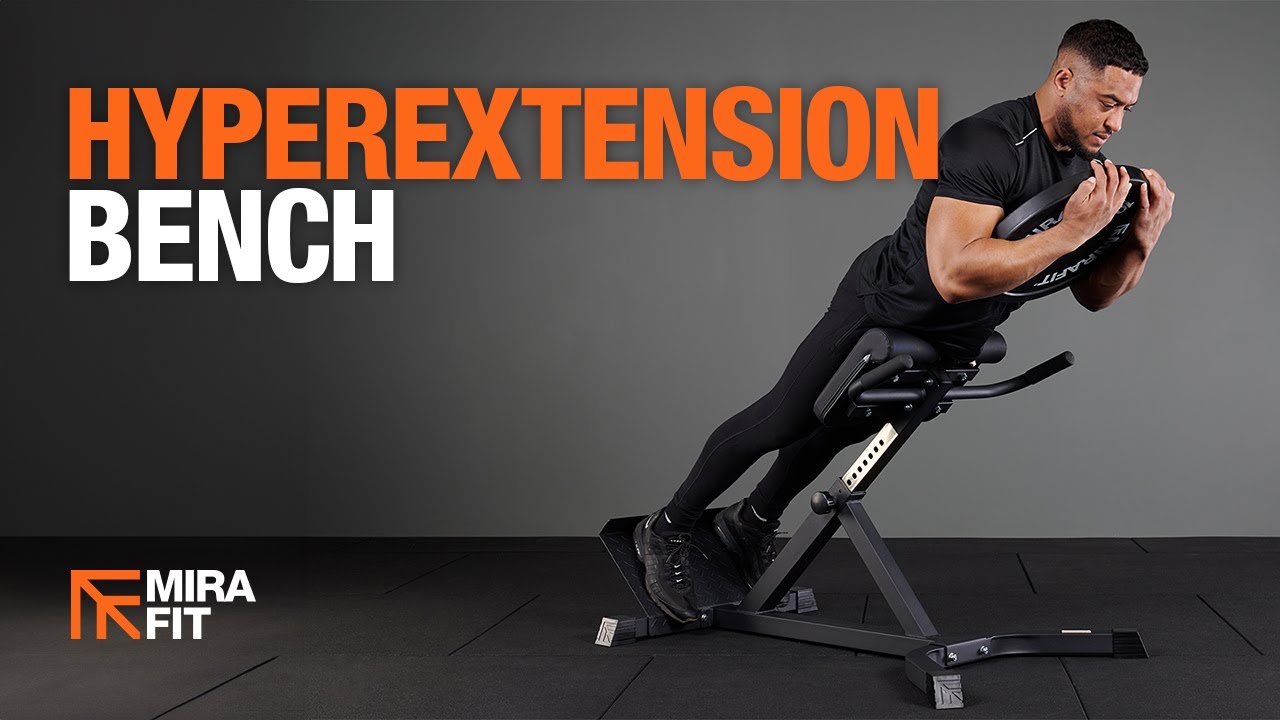
- Hold a weight plate or dumbbell close to your chest.
- Perform the back extension as described above.
Tip:
Start with a light weight. Increase slowly to avoid straining your back.
3. Reverse Hyperextension
This variation targets your glutes and hamstrings more deeply.
How to do it:
- Lie face down on the bench with your hips just off the edge.
- Hold onto the handles or frame for support.
- Let your legs hang straight down.
- Lift both legs up behind you as high as possible without arching your back.
- Lower legs back down with control.
Tip:
Focus on squeezing your glutes at the top. Avoid swinging your legs.
4. Single-leg Hyperextension
This move increases the challenge for your balance and muscle control.
How to do it:
- Perform the standard back extension, but lift one leg off the foot support and keep it in the air throughout the set.
- Switch sides after completing your reps.
Tip:
This is harder than it looks. Start with low reps (6–8 per side).
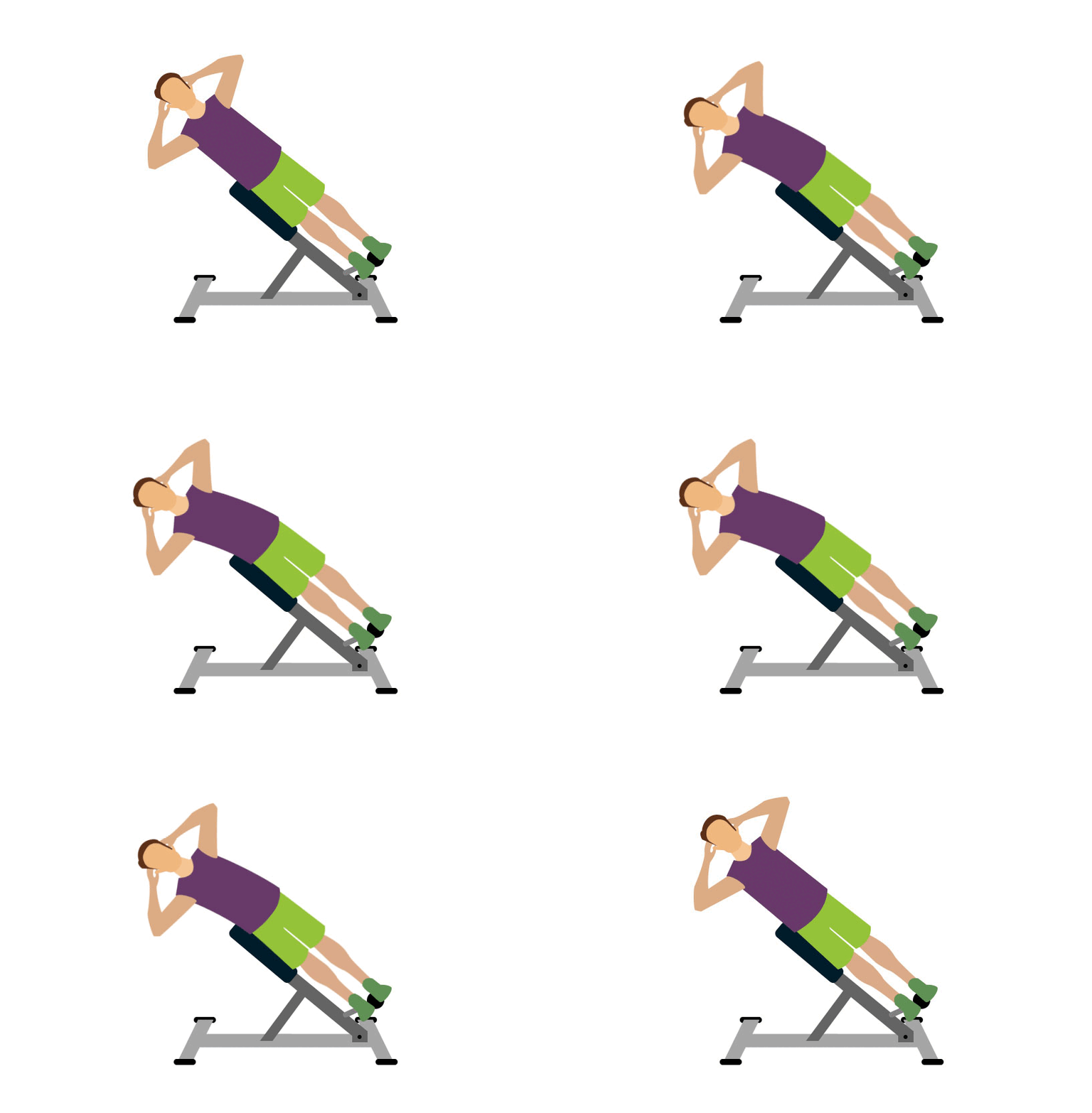
5. Side Hyperextension
Targets your obliques and helps strengthen the sides of your core.
How to do it:
- Adjust the bench so your hip is on the pad and your upper body faces sideways.
- Cross your arms or hold a weight to your chest.
- Lower your torso sideways and then return to start.
Tip:
Don’t twist your body—move straight sideways.
6. Isometric Hold
Great for building endurance in your lower back.
How to do it:
- Get into the top position of a standard back extension.
- Hold your body in a straight line for 20–40 seconds.
Tip:
Keep breathing and do not let your back sag.
7. Hyperextension With Row
This advanced move works your upper back as well.
How to do it:
- Hold a light dumbbell in each hand.
- Perform a back extension, and at the top, row the weights toward your chest, squeezing your shoulder blades.
- Lower weights and repeat.
Tip:
Focus on control, not on lifting heavy.
8. Oblique Twist Hyperextension
Involves rotation to target your obliques and spine stabilizers.
How to do it:
- As you raise your torso during a standard back extension, twist your upper body to one side.
- Alternate sides each rep.
Tip:
Twist gently—do not force the motion.
9. Hyperextension Bench Crunch
Shifts the focus to your abs.
How to do it:
- Sit on the bench facing up, with feet under the pads.
- Perform a slow crunch, bringing your chest toward your knees.
Tip:
Do not pull on your neck.
10. Dynamic Hyperextension
This explosive move is used by athletes to build power.
How to do it:
- Perform the standard back extension, but move up quickly (while staying in control), then lower slowly.
Tip:
Use only once you have perfect form.
Credit: www.youtube.com
Sample Hyperextension Bench Workout Routine
You might wonder how to fit these exercises into your regular workouts. Here’s a balanced routine for beginners and intermediates:
| Exercise | Sets | Reps | Rest |
|---|---|---|---|
| Standard Back Extension | 3 | 12–15 | 60 sec |
| Single-Leg Hyperextension | 2 | 8 per side | 60 sec |
| Side Hyperextension | 2 | 10 per side | 60 sec |
| Isometric Hold | 2 | 30 sec | 60 sec |
You can add these at the end of a leg day or back workout. Adjust the number of sets and reps as you get stronger.
Comparing Hyperextension Benches
Not all benches are the same. Here’s a quick look at the main types and their differences:
| Bench Type | Main Features | Best For |
|---|---|---|
| 45-Degree Bench | Angled at 45°, easier for beginners, usually shorter | General gym users, beginners |
| Roman Chair (Horizontal) | Flat (horizontal), more range of motion, harder | Advanced users, athletes |
| Reverse Hyper Machine | Special machine for swinging legs up, often in rehab settings | Powerlifters, rehab, glute work |
If you’re buying for home use, choose a 45-degree bench for safety and flexibility.
Common Mistakes And How To Avoid Them
Even experienced lifters sometimes make errors on the hyperextension bench. Here’s what to watch for:
- Overextending the back: Leaning too far up at the top can compress your spine. Stop when your body forms a straight line.
- Moving too fast: Slow, controlled motion protects your back and works your muscles more.
- Rounding the back: Keep your spine neutral. Rounding increases injury risk.
- Ignoring the glutes: Squeeze your glutes at the top to get the full benefit.
- Adding weight too soon: Master bodyweight form first.
A non-obvious tip: Keep your chin tucked slightly (double chin position) to protect your neck alignment.
Progression And Variation
As you improve, you can increase the challenge by:
- Adding resistance: Hold a plate or dumbbell on your chest.
- Changing tempo: Try 3 seconds up, 3 seconds down.
- Single-leg work: Lifting one leg increases core and hip engagement.
- Combining movements: Add rows or twists for more muscle activation.
If you ever feel pain (not just muscle fatigue), stop and check your form.
Credit: backmusclesolutions.com
Who Should Use The Hyperextension Bench?
Athletes in sports like running, soccer, and weightlifting get huge benefits from a strong posterior chain.
People with desk jobs often develop weak lower backs, so this bench helps fight back pain and poor posture.
Older adults can use hyperextension exercises (with a doctor’s approval) to improve balance and reduce fall risk.
But these exercises are not for everyone. If you have a recent back injury or herniated disc, ask your doctor or physical therapist before trying.
Integrating Hyperextension Bench Exercises Into Your Training
The best way to use these exercises is 2–3 times per week, with at least one day of rest between sessions. You can add them at the end of your leg day or back workout, or even as a stand-alone core routine.
For athletes, hyperextensions are often used as accessory work after big lifts like squats and deadlifts. For beginners, start with bodyweight only and focus on perfect form before increasing intensity.
Here’s an example of how you could progress over a month:
| Week | Exercise | Sets | Reps | Notes |
|---|---|---|---|---|
| 1 | Standard Back Extension | 2 | 10–12 | Bodyweight only |
| 2 | Standard Back Extension | 3 | 12–15 | Increase range of motion |
| 3 | Weighted Hyperextension | 3 | 10–12 | Add light plate |
| 4 | Single-Leg Hyperextension | 2 | 8 per side | Increase challenge |
Safety Tips And Who Should Avoid
Always warm up before using the hyperextension bench. Bodyweight squats, lunges, or a few minutes on the treadmill can activate your muscles.
People with known spinal injuries, herniated discs, or osteoporosis should avoid these exercises unless cleared by a medical professional. Pregnant women should also check with a doctor.
A less-known fact: If you feel your lower back working too much and not your glutes, your bench may be adjusted too high. Lower the pad so you can hinge at your hips, not your waist.
How To Choose A Good Hyperextension Bench
If you want to buy one for home use, look for:
- Adjustability: Can you change pad height and foot position?
- Stability: Does the bench wobble?
- Comfort: Is the pad thick and wide enough?
- Size: Will it fit in your space?
You don’t need a commercial-grade model, but avoid very cheap benches with thin pads—they can cause discomfort or even injury.
For more details on bench types and safety, see this Wikipedia article.

Credit: aeroclubcomo.com
Frequently Asked Questions
What Muscles Do Hyperextension Bench Exercises Work?
These exercises mainly target the erector spinae (lower back muscles), glutes, and hamstrings. Some variations also work the core and obliques.
How Often Should I Use The Hyperextension Bench?
For best results, 2–3 times per week is enough. Make sure you have at least one rest day between sessions to let your muscles recover.
Are Hyperextension Bench Exercises Safe For Beginners?
Yes, if you use proper form and start with bodyweight only. Avoid adding weight or advanced variations until you can do 15 good-quality reps.
Can Hyperextension Exercises Help With Back Pain?
They can help if your back pain is due to weak muscles and you use correct form. But if you have a back injury, always check with your doctor first.
What Is The Difference Between A 45-degree And A Horizontal Bench?
A 45-degree bench is angled, making it easier for beginners and safer for the lower back. A horizontal (Roman chair) bench is flat, allows more range of motion, and is harder, best for advanced users.
Hyperextension bench exercises are a powerful tool for anyone wanting to build a strong, healthy back and core. Start with the basics, progress slowly, and always focus on good form. Your body will thank you for the effort.