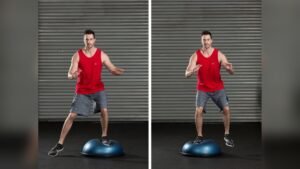
Are you ready to take your balance and strength to the next level? Balance exercises with Bosu ball can transform the way you move every day.
Whether you want to prevent falls, improve your posture, or boost your athletic performance, this simple tool offers a powerful workout. You’ll discover easy-to-follow exercises that challenge your body and sharpen your focus. Get ready to feel stronger, steadier, and more confident with every step you take.
Keep reading to unlock the full potential of your balance training!
Benefits Of Bosu Ball Training
Bosu ball training offers many benefits for your body and fitness. It challenges your muscles and balance in new ways. This type of exercise adds variety to your workouts. It helps you build strength, stability, and endurance. The benefits of Bosu ball training go beyond just balance. Here are some key advantages of including it in your routine.
Enhancing Core Strength
Bosu ball exercises activate your core muscles deeply. Your body works hard to stay stable on the ball. This constant effort strengthens the abs and lower back. A strong core improves posture and reduces injury risks. Core strength also helps in daily activities and other workouts.
Improving Balance And Coordination
Training on a Bosu ball improves your balance greatly. Your body learns to adjust quickly to changes in position. This boosts coordination between muscles and the brain. Better balance helps prevent falls and improves athletic skills. It also makes movements smoother and more controlled.
Increasing Muscle Endurance
Bosu ball workouts challenge your muscles to work longer. The unstable surface requires sustained muscle effort. This builds endurance, so muscles tire less quickly. Improved muscle endurance supports longer and more effective exercise sessions. It also helps you stay active throughout the day.

Credit: www.acefitness.org
Choosing The Right Bosu Ball
Choosing the right Bosu ball is key to effective balance exercises. The correct ball supports your body well and helps prevent injuries. Not all Bosu balls are the same. Different sizes and materials suit different workout needs. Proper inflation also affects performance and safety. Understanding these factors helps you pick the best Bosu ball for your exercises.
Size And Material Options
Bosu balls come in various sizes. The most common diameter is 22 inches, suitable for most adults. Smaller balls, around 18 inches, fit kids or smaller adults better. Larger options offer more stability for beginners or heavy users.
The material affects grip and durability. Most Bosu balls use durable rubber for the dome. Some have a textured surface for extra grip. The base is usually hard plastic to keep the ball steady. Choose a material that feels comfortable and safe for your workouts.
Inflation Tips For Optimal Use
Proper inflation is essential for the best balance training. A fully inflated Bosu ball is firm and offers good resistance. Under-inflated balls feel soft and reduce stability.
Use a pump with a pressure gauge to check inflation. Aim for firm but slightly flexible. Avoid over-inflating, as it can cause damage. Check the ball regularly and adjust air pressure as needed. This keeps your exercises safe and effective.
Basic Balance Exercises
Basic balance exercises on the Bosu ball help improve stability and coordination. These exercises engage your core and leg muscles. They also train your body to react quickly to changes in position. Beginners can start with simple moves and gradually increase difficulty.
Practicing these exercises regularly can enhance your overall balance. This reduces the risk of falls and injuries. It also supports better posture and movement control.
Single-leg Stand
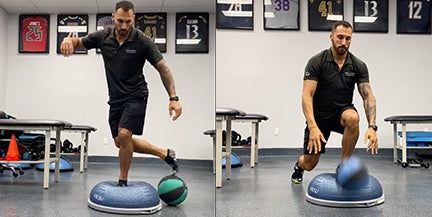
Stand on the flat side of the Bosu ball with one foot. Lift the other foot slightly off the ground. Keep your body upright and your core tight. Hold the position for 20 to 30 seconds. Switch legs and repeat. This exercise improves single-leg strength and balance.
Squats On The Bosu
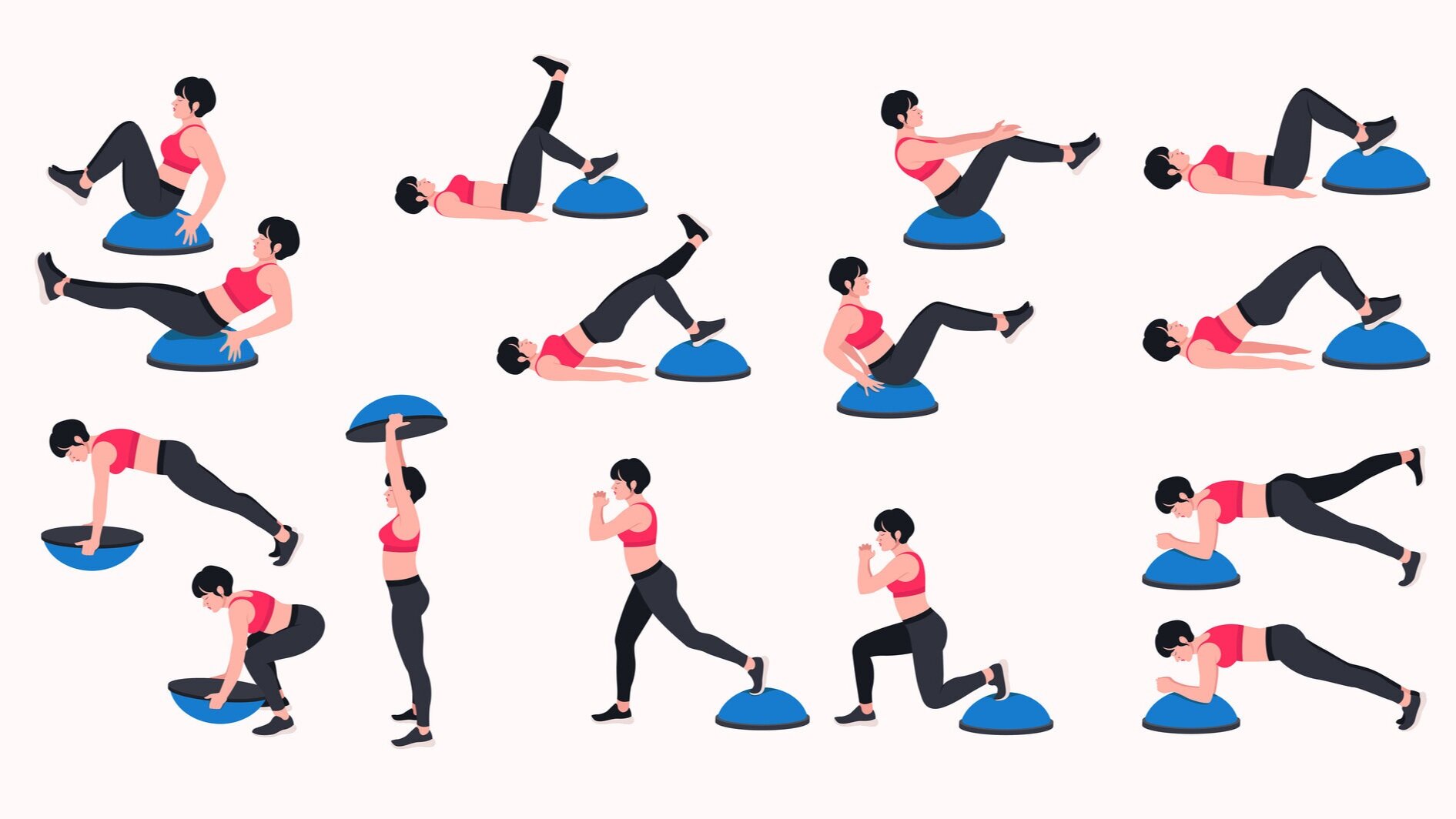
Place both feet on the rounded side of the Bosu ball. Keep your feet shoulder-width apart. Slowly bend your knees and lower your hips into a squat. Keep your back straight and chest up. Rise back to the starting position. This move strengthens your legs and challenges your balance.
Plank Variations
Place your hands on the flat side of the Bosu ball. Extend your legs behind you to form a plank. Hold your body in a straight line from head to heels. Try lifting one arm or leg for added challenge. This exercise builds core strength and stability.
Credit: bosu.com
Advanced Stability Moves
Advanced stability moves with the Bosu ball challenge your balance and strength. These exercises improve coordination and core power. They push your body to stay steady on an unstable surface. This leads to better control and injury prevention.
Try these moves to enhance your workout routine. Each exercise targets different muscles and balance skills. Focus on form and control for best results.
Lunges With Bosu
Place one foot on the flat side of the Bosu ball. Step forward with the other foot. Lower your body into a lunge, keeping your balance. Push back to the start position. This move strengthens legs and improves stability.
Push-ups On The Dome
Turn the Bosu ball dome side up. Place your hands on the dome and feet on the floor. Lower your chest toward the Bosu ball. Push back up while maintaining balance. This works your chest, arms, and core muscles.
Mountain Climbers
Start in a push-up position with hands on the dome. Bring one knee toward your chest. Quickly switch legs, like running in place. Keep your body steady and core tight. This exercise boosts endurance and balance at once.
Integrating Bosu Workouts Into Routine
Integrating Bosu workouts into your routine boosts balance and strength. The Bosu ball adds instability. This forces your muscles to work harder to stay steady. Use it regularly to improve coordination and core strength.
Start slow and increase difficulty as you gain confidence. Combine Bosu exercises with other workouts for the best results. Balance training helps all fitness levels stay injury-free and agile.
Warm-up And Cool-down Tips
Begin with gentle movements to prepare your body. March in place or do light stretches for 5 minutes. Use the flat side of the Bosu ball for simple warm-ups. Step on and off slowly to activate leg muscles.
After your workout, cool down with stretches. Focus on your legs, hips, and core muscles. Hold each stretch for 20 seconds. Gentle stretching helps muscles recover and reduces soreness.
Combining With Other Training
Mix Bosu exercises with strength training and cardio. Try squats or lunges on the Bosu ball for added challenge. Use it during planks or push-ups to improve stability.
Balance work complements running, cycling, and weightlifting. It helps your body stay steady and avoid falls. Include Bosu exercises 2-3 times a week for balanced fitness.
Credit: finuniverblg.ru.net
Safety And Injury Prevention
Balance exercises with a Bosu ball improve strength and coordination. Safety is very important during these workouts. Proper techniques reduce injury risk. Focus on control and stability. Work within your comfort level to avoid falls and strains.
Proper Form Guidelines
Stand with feet hip-width apart on the flat side of the Bosu ball. Keep your knees slightly bent. Engage your core muscles. Maintain a straight back and relaxed shoulders. Avoid locking your joints. Move slowly and with control. Use your arms for balance. Breathe steadily throughout the exercise.
Avoiding Common Mistakes
Do not rush through the movements. Avoid looking down at your feet. Keep your gaze forward. Do not hold your breath. Avoid using a Bosu ball that is too soft or worn out. Avoid bending your knees too much or locking them straight. Do not let your body sway excessively. Stop if you feel pain or dizziness.
Frequently Asked Questions
What Are The Benefits Of Balance Exercises With A Bosu Ball?
Balance exercises with a Bosu ball improve stability, core strength, and coordination. They also enhance athletic performance and reduce injury risk by training multiple muscle groups simultaneously.
How Do I Start Balance Training Using A Bosu Ball?
Begin by standing on the flat side of the Bosu ball with feet shoulder-width apart. Focus on maintaining your balance for 30 seconds, gradually increasing time as you improve.
Can Bosu Ball Exercises Help With Injury Recovery?
Yes, Bosu ball exercises aid injury recovery by improving joint stability and muscle strength. They promote better proprioception, which helps prevent future injuries during daily activities or sports.
Which Muscles Are Targeted During Bosu Ball Balance Workouts?
Bosu ball workouts primarily engage core muscles, calves, thighs, and glutes. These exercises also activate smaller stabilizer muscles that support balance and coordination.
Conclusion
Balance exercises with a Bosu ball improve stability and strength. They challenge your muscles in new ways. Regular practice helps prevent falls and injuries. You can start with simple moves and grow stronger. This tool suits all fitness levels. It makes workouts more fun and effective.
Keep practicing to see steady progress. Your body will feel more balanced and confident. Try adding Bosu ball exercises to your routine today. Small steps lead to big improvements.