
Are you ready to take your push-up game to the next level? The Bosu Ball Push Up is a powerful exercise that not only builds your upper body strength but also challenges your balance and core stability like never before.
By adding the unstable surface of the Bosu ball to your routine, you force your muscles to work harder, activating those often-overlooked stabilizer muscles. Whether you’re looking to improve your overall fitness, enhance coordination, or add variety to your workouts, mastering the Bosu ball push-up can transform your strength and control.
Keep reading to discover how to perform this move correctly, the key benefits, and variations that will keep your workouts fresh and effective. Your stronger, more balanced body awaits!
Benefits Of Bosu Ball Push-ups
Bosu ball push-ups offer several fitness benefits beyond the traditional push-up. This exercise adds instability, which challenges muscles in new ways. It helps build strength, improve balance, and engage core muscles more deeply. Using a Bosu ball makes push-ups more effective and dynamic.
Enhancing Upper Body Strength
Bosu ball push-ups increase upper body strength by targeting the chest, shoulders, and arms. The unstable surface forces muscles to work harder to maintain control. This builds muscle power and endurance faster than regular push-ups. Your upper body becomes stronger and more resilient.
Improving Core Stability
The Bosu ball challenges your core to stay balanced during push-ups. This activates the abdominal and lower back muscles continuously. Strong core stability supports better posture and reduces injury risk. It also improves overall body control in other activities.
Boosting Balance And Coordination
Performing push-ups on a Bosu ball enhances your balance and coordination. The wobbling surface requires your body to adjust constantly. These adjustments train your nervous system and muscles to work together. Better balance helps in sports and daily movements.
Activating Stabilizer Muscles
Bosu ball push-ups activate small stabilizer muscles often missed in regular exercises. These muscles support joints and improve joint stability. Strengthening stabilizers reduces the chance of strains and sprains. It also improves functional strength for everyday tasks.
Muscles Engaged During Bosu Push-ups
Bosu ball push-ups target multiple muscle groups at once. The unstable surface forces your body to work harder. This increases muscle activation and improves balance. Each muscle group plays a key role during the movement. Understanding which muscles engage helps you perform better and avoid injury.
Chest And Shoulders
The chest muscles, mainly the pectorals, push your body up. The shoulders, especially the deltoids, stabilize your arms. They work together to control the movement. The Bosu ball challenges these muscles more than regular push-ups. This helps build strength and endurance in your upper body.
Core And Abdominals
Your core muscles stay tight to keep balance. The abdominals, including the rectus abdominis and obliques, engage deeply. They prevent your hips from sagging or twisting. This constant tension improves core stability and posture. A strong core supports better overall performance.
Arms And Triceps
The arms, mainly the triceps, extend your elbows during the push-up. They help push your body away from the Bosu ball. The forearms also engage to stabilize your wrists. This procedure improves arm strength and control. The instability of the Bosu ball increases muscle activation here.
Leg And Glute Activation
Your legs and glutes work to keep your body steady. The glute muscles activate to hold your hips up. The quads and hamstrings help maintain a solid plank position. This engagement supports balance and prevents wobbling. It also tones your lower body while working your upper body.
Step-by-step Bosu Push-up Technique
The Bosu ball push-up is a dynamic exercise that combines strength and balance. It challenges your upper body and core muscles more than a regular push-up. Follow these simple steps to perform the Bosu ball push-up with proper form. This guide ensures you get the most from your workout while avoiding injury.
Positioning The Bosu Ball
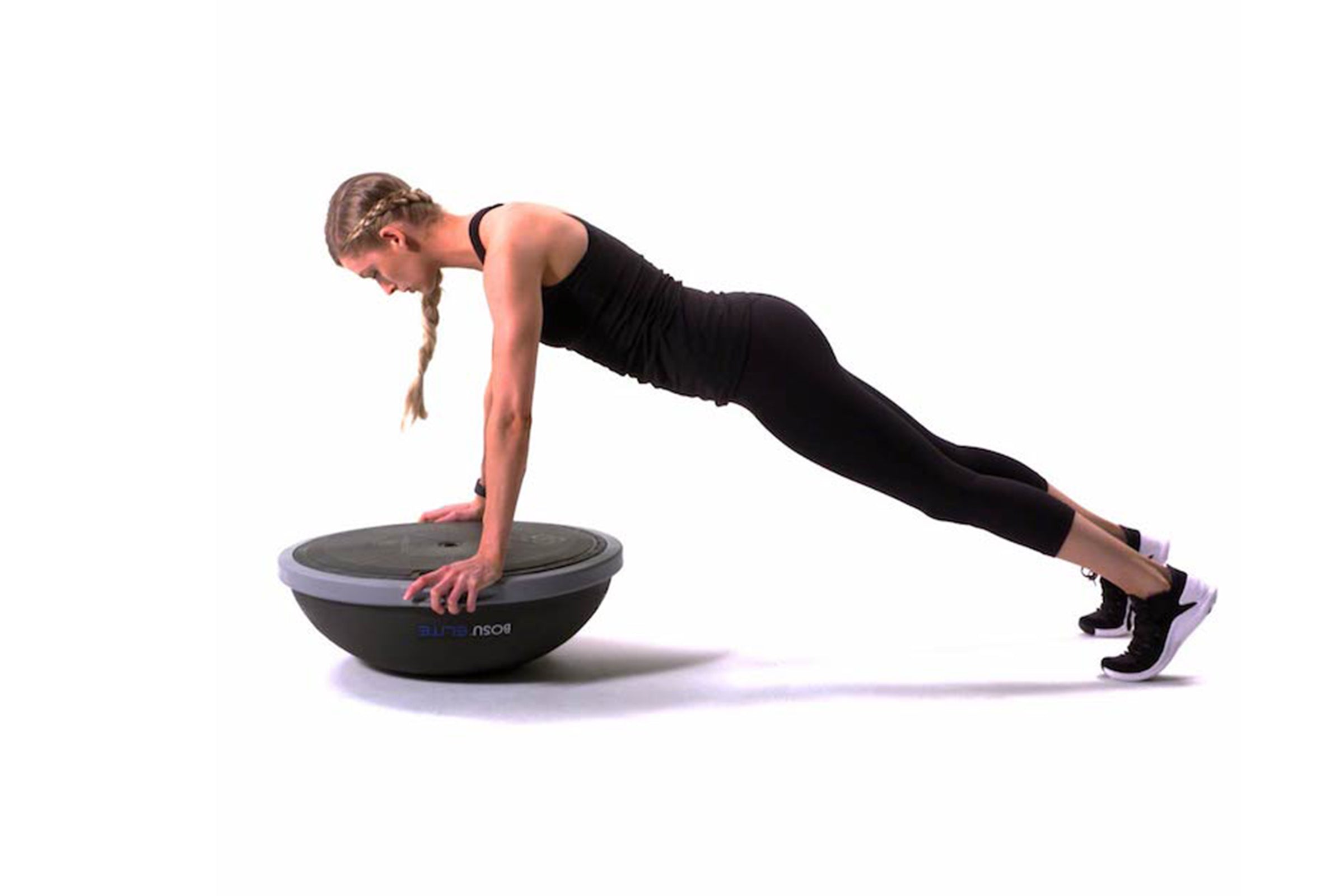
Place the Bosu ball on a flat surface with the dome side facing up. Make sure it is stable and will not move during the exercise. Check the area around you for enough space to stretch out fully. This setup helps you maintain balance throughout the movement.
Hand And Body Placement
Place your hands shoulder-width apart on the flat rim of the Bosu ball. Keep your fingers spread for a better grip. Extend your legs behind you, toes touching the ground. Your body should form a straight line from head to heels. Engage your core to keep your back flat and avoid sagging hips.
Movement Execution
Slowly bend your elbows and lower your chest toward the center of the Bosu ball. Keep your elbows close to your body for better control. Pause briefly at the bottom of the movement. Push back up through your palms until your arms are fully extended. Keep your body steady and avoid rocking on the ball.
Common Mistakes To Avoid
Do not let your hips drop or stick up in the air. Avoid flaring your elbows out too wide, which can strain your shoulders. Do not rush the movement; control is key for balance and strength. Avoid placing your hands too far forward or backward on the Bosu ball. These mistakes reduce effectiveness and may cause injury.
Credit: shockfitapp.com
Variations To Challenge Stability
Adding variations to Bosu ball push-ups increases the challenge to your stability. These variations force your muscles to work harder to keep balance. They engage core and stabilizer muscles more effectively. Changing the position of the Bosu Ball or your body alters the difficulty. This section explores four effective variations to help you improve strength and balance.
Bosu Ball Dome Side Up
Place the Bosu Ball with the dome side facing up. Put your hands on the dome and feet on the floor. This position creates an unstable surface for your hands. Your arms and core muscles work harder to stay steady. It helps improve wrist strength and shoulder stability. This variation is great for beginners building balance and strength.
Bosu Ball Dome Side Down
Flip the Bosu Ball so the flat side is up and dome touches the floor. Place your hands on the flat surface and feet on the floor. This setup makes your hands more stable but challenges your core differently. You need to control the dome’s movement under your chest. It engages deeper core muscles and improves control. This variation suits those who want a mid-level challenge.
Single-leg Bosu Push-ups
Perform push-ups on the Bosu Ball with one leg lifted off the ground. Keep the other leg and hands balanced on the Bosu Ball. This reduces your base of support and demands more stability. Your core, glutes, and leg muscles activate to keep balance. It also enhances coordination between upper and lower body. Try this variation to increase difficulty and improve body control.
Incline And Decline Variations
Use a bench or step to perform incline or decline Bosu Ball push-ups. For incline, place your hands on the Bosu Ball and feet on a raised surface. For decline, place your feet on the Bosu Ball and hands on the floor. Incline variations reduce load on arms, suitable for beginners. Decline variations increase load and challenge shoulders more. Both variations improve strength and stability in different ways.
Comparing Bosu Push-ups To Regular Push-ups
Comparing Bosu push-ups to regular push-ups reveals key differences in effort and benefits. Both exercises target the upper body, but the Bosu version adds a unique challenge. This challenge comes from the unstable surface of the Bosu ball. It changes how your muscles work and how hard the exercise feels. Understanding these differences can help you choose the best push-up type for your fitness goals.
Difficulty Level Differences
Bosu push-ups are harder than regular push-ups. The unstable surface forces your body to work extra to keep balance. This makes your muscles work more and fatigue faster. Regular push-ups have a stable base, so they feel easier and allow more reps. Bosu push-ups require better control and strength to complete each movement safely.
Muscle Activation Contrast
Bosu push-ups activate more stabilizer muscles than regular push-ups. Your core, shoulders, and arms work harder to stay steady on the Bosu ball. Regular push-ups mainly focus on the chest, triceps, and shoulders. The Bosu ball engages smaller muscles around joints to help with balance. This leads to better overall muscle coordination and strength.
Impact On Balance Training
Bosu push-ups improve balance and coordination more effectively. The unstable surface forces your body to adjust constantly. This trains your nervous system to react faster and keep you steady. Regular push-ups do not challenge your balance much. Using a Bosu ball can help athletes and fitness lovers improve body control and prevent falls.

Credit: liftmanual.com
Alternatives To Bosu Ball Push-ups
Exploring alternatives to Bosu Ball Push-Ups can keep your workouts fresh. Different tools offer unique challenges and benefits. These options help target muscles and improve stability in varied ways. Switching up exercises prevents plateaus and supports overall strength.
Stability Ball Push-ups
Stability ball push-ups use a large exercise ball. Place your hands or feet on the ball for support. The ball moves slightly during the exercise. This movement forces your core and stabilizer muscles to engage. It also improves balance and coordination. This option is great for enhancing core strength while working the chest and arms.
Trx Suspension Push-ups
TRX suspension push-ups use straps hanging from an anchor point. Your hands hold the handles, which move freely. This instability increases muscle activation in the chest, shoulders, and core. The angle of your body changes the exercise difficulty. You can adjust the height to match your strength level. It offers a full-body workout and challenges your stability.
Medicine Ball Push-ups
Medicine ball push-ups involve placing one or both hands on a medicine ball. The ball creates an unstable surface, engaging more muscles. This exercise improves wrist strength and flexibility. It also targets the chest, shoulders, and triceps differently. Switching hand positions adds variety and balances muscle development. It is a simple way to add intensity to traditional push-ups.
Incorporating Bosu Push-ups Into Workouts
Incorporating Bosu push-ups into your workouts adds a new challenge to your routine. The unstable surface of the Bosu ball forces your muscles to work harder. This improves strength, balance, and core stability all at once. Using Bosu push-ups regularly helps build overall functional fitness. Below are ways to include them effectively in various workout types.
Warm-up And Activation
Start your session with Bosu push-ups to activate your muscles. This exercise wakes up your chest, shoulders, and core. It also improves your body awareness before heavier lifts. Perform 2 sets of 8-10 reps at a slow pace. Focus on control and steady breathing. This warm-up prepares your body for stronger performance.
Strength Training Routines
Add Bosu push-ups into upper-body strength days for extra challenge. They increase muscle activation compared to regular push-ups. Try 3 sets of 10-12 reps after your main lifts. Use the Bosu ball with the dome side down for stability work. This helps build strength and balance simultaneously. Adjust reps and sets based on your fitness level.
Balance And Rehab Sessions
Bosu push-ups are excellent for balance and injury rehab work. The unstable surface engages small stabilizer muscles. These muscles support joint health and prevent injuries. Include 2-3 sets of 6-8 reps in rehab or balance routines. Perform slowly and focus on smooth, controlled movements. This aids recovery and improves overall stability.

Credit: www.youtube.com
Safety Tips And Precautions
Performing Bosu Ball Push Ups safely is important to avoid injury and get the best results. This exercise challenges your balance and strength at the same time. Taking precautions helps protect your joints and muscles. Follow these safety tips to enjoy Bosu Ball Push Ups with confidence.
Avoiding Injury
Keep your hands shoulder-width apart on the Bosu ball. Engage your core to support your spine. Avoid letting your hips sag or rise too high. Use a soft surface or mat under your knees if needed. Warm up your wrists and shoulders before starting. Stop immediately if you feel sharp pain or discomfort.
Progressing Gradually
Begin with easier versions, such as knee push ups on the Bosu ball. Increase intensity slowly by extending your legs fully. Add more reps or sets one step at a time. Practice good form before trying harder variations. Give your muscles time to adapt and recover between sessions. Don’t rush progress to reduce injury risk.
Listening To Your Body
Notice any tightness or strain during the exercise. Rest if you feel tired or unstable. Modify the movement if needed to stay comfortable. Pay attention to your breathing and keep it steady. Avoid pushing through pain, as this may cause harm. Consistent awareness helps maintain safety and improve performance.
Frequently Asked Questions
What Muscles Do Bosu Ball Push Ups Target?
Bosu ball push ups engage the chest, shoulders, and triceps like regular push ups. They also activate core and stabilizer muscles due to the unstable surface, improving balance and coordination.
Are Bosu Ball Push Ups Harder Than Regular Push Ups?
Yes, Bosu ball push ups are more challenging. The unstable surface forces your body to work harder to maintain balance, recruiting more stabilizer muscles and enhancing core strength.
What Are The Main Benefits Of Bosu Ball Push Ups?
They improve upper body strength, core stability, balance, and coordination. Bosu ball push ups also increase muscle activation and reduce injury risk through enhanced joint stability.
Can Beginners Do Bosu Ball Push Ups Safely?
Beginners should start with modified versions, like doing push ups on knees or using the flat side of the Bosu ball. Gradually increase difficulty as balance and strength improve.
Conclusion
Bosu ball push-ups add challenge to a common exercise. They improve balance, core strength, and stability. Using the unstable surface forces more muscles to work. This makes your workout more effective and engaging. Try adding Bosu push-ups to your routine slowly.
Focus on form to avoid injury and get the best results. Consistent practice helps build strength and coordination over time. Keep pushing yourself, and enjoy the benefits of this simple tool.