Understanding The Choice Between Functional Trainer And Power Rack
Choosing between a functional trainer and a power rack can be confusing for many buyers. Both offer strength training benefits but serve different workout needs. The decision often feels harder than it looks because of overlapping features and marketing claims. This article aims to clarify how each machine fits different lifestyles and training goals. By the end, you will have a clearer idea of which option suits you better. This can help you avoid costly mistakes and find the right fit for your home gym.
Why Buyers Find This Comparison Challenging
Marketing noise often blurs the real differences. Brands emphasize versatility and durability, making both options sound equally good. It becomes tough to discern what truly matters for your personal workout.
Specifications can be confusing. Numbers like weight capacity, pulley ratios, and footprint size are important but not always easy to compare directly. This adds complexity to the decision.
Buyers sometimes focus on the wrong priorities, like picking the flashiest feature rather than what fits their space or workout style. This misalignment can lead to disappointment later.
Different Types Of Buyers
If you have limited space and want an all-in-one solution, a compact and multi-mode option might suit you best. The Mikolo Folding Squat Rack fits this need well.
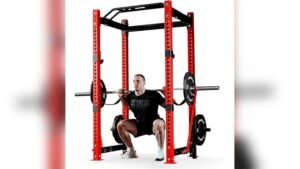
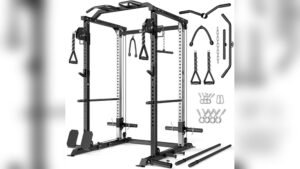
For those who prioritize heavy lifting and a sturdy frame, the MAJOR FITNESS Power Cage Drone1 offers solid construction and stability.
Beginners looking for straightforward weight training might lean toward the power rack style for its simplicity and safety features.
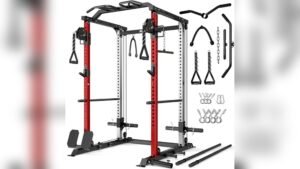
Experienced lifters interested in varied cable exercises and functional movements may appreciate the functional trainer aspects integrated into some racks.
People who want lifetime support and a budget-friendly option might find confidence in the MAJOR FITNESS lifetime assistance and reinforced design.
Overall, space-conscious users tend to prefer the Mikolo model, while those focused on heavy-duty training often choose the MAJOR FITNESS rack.
Where The Mikolo Folding Squat Rack Fits Naturally
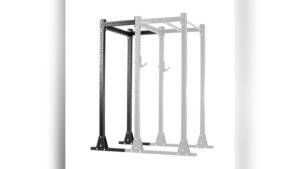
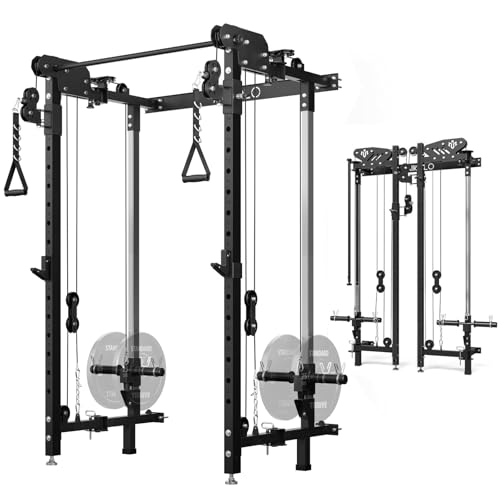
This folding squat rack works well for daily workouts in small home gyms or garages. I find its space-saving design helpful when the room is tight. Its multiple function modes allow switching between power rack and functional trainer easily. One limitation is the need for a wall mount, which restricts placement options.
What works well over time
- Space-saving foldable design for tight areas
- Versatile with five adjustable workout modes
- Strong steel frame supports up to 1000 lbs
- Smooth cable pulley system with 1:1 ratio
- Detachable pull-up bar adds workout variety
Things that may bother some users
- Requires secure wall mounting for stability
- Weight stack limitations compared to commercial gyms
- Setup and installation can be complex
- Less portable due to fixed wall mount
Where The Major Fitness Power Cage Drone1 Makes More Sense
The Drone1 fits well in home gyms where a durable and multifunctional power rack is desired. I appreciate its reinforced uprights that reduce wobbling during heavy lifts. Its simpler design compared to folding racks offers a straightforward setup. One limitation is the larger footprint that may not suit very small spaces.
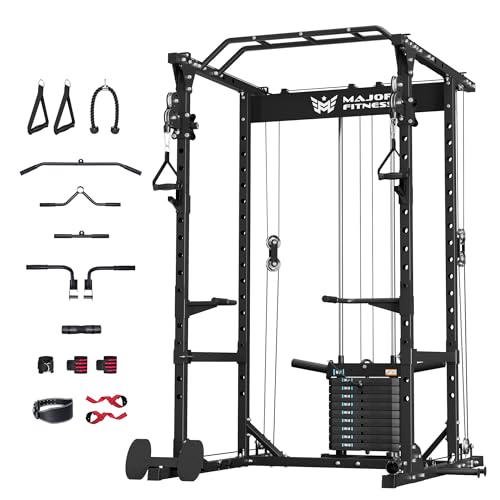
What works well over time
- Heavy-duty steel construction for stability
- Lifetime support from the manufacturer
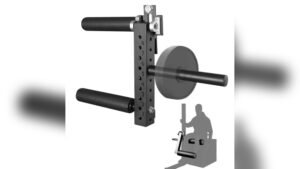
- Integrated cable crossover and Landmine attachments
- Reinforced uprights prevent wobble
- Simple design aids consistent use and maintenance
Things that may bother some users
- Larger size requires more gym space
- Less adjustable compared to folding racks
- May feel bulky in smaller rooms
- Setup instructions rely on video review
Early Decision Signals Most Buyers Notice
Space availability is often the first factor. Buyers with limited room lean toward compact and foldable solutions like the Mikolo rack. The ability to fold and store it flat can be a deal maker.
Weight capacity and stability come next. Those planning heavy lifts look for racks with strong steel and minimal wobble, which the MAJOR FITNESS cage offers.
Versatility in workout modes influences choices. The Mikolo provides multiple function modes, appealing to users wanting varied exercises in one unit.
Support and warranty matter for confidence. Lifetime support from MAJOR FITNESS reassures buyers concerned about long-term reliability.
Ease of installation is also a signal. Wall-mounted racks require more precise mounting, while free-standing racks like Drone1 are more straightforward to place.
Decision Signals Comparison
Here’s a quick look at how the Mikolo Folding Squat Rack and MAJOR FITNESS Power Cage Drone1 compare on key decision points.
| Decision signal (before buying) | Mikolo Folding Squat Rack | MAJOR FITNESS Power Cage Drone1 |
|---|---|---|
| Learning curve | Moderate due to multiple function modes | Low; straightforward power rack design |
| First impressions | Compact and versatile | Robust and heavy-duty |
| Setup comfort | Requires wall mounting and space planning | Simple free-standing assembly |
| Clarity of use | High versatility may require more user understanding | Clear functional focus on power rack training |
| Space requirements | Very compact when folded | Needs larger dedicated space |
| Support and warranty | Standard manufacturer support | Lifetime support offered |
What Living With These Products Feels Like
Maintenance for both racks involves regular checks on bolts and cables. The Mikolo’s wall mounts need occasional tightening to maintain stability. The Drone1’s steel frame is durable but may need cleaning to prevent rust over time.
Consistency in workouts depends on space and setup ease. Mikolo’s folding feature encourages use in smaller spaces but requires unfolding. Drone1’s stable frame supports heavier lifts consistently.
Minor annoyances include the Mikolo’s wall mount limiting relocation. Drone1’s larger size can feel intrusive in a small room. Cable adjustments on both racks may require some patience.
Trust builds over time with both models. Users report confidence in the Mikolo’s multifunctionality and Drone1’s sturdiness. Both machines hold up well with regular use.
Long-term Ownership Comparison
Reviewing how these racks perform after weeks or months reveals useful insights.
| Ownership reality (after weeks/months) | Mikolo Folding Squat Rack | MAJOR FITNESS Power Cage Drone1 |
|---|---|---|
| Reliability | Stable if wall-mounted properly | Very reliable with reinforced frame |
| Habit fit | Good for users valuing space saving | Best for dedicated heavy lifters |
| Mental load | Higher due to mode switching | Lower; straightforward functions |
| Satisfaction | High for versatile workouts | High for solid and stable lifts |
| Maintenance effort | Moderate; includes wall mount checks | Low; mostly cleaning and tightening |
| Longevity | Good with proper care | Excellent due to heavy-duty build |
Common Mistakes Buyers Make
Buying without measuring space first leads to fit problems. Always check your available gym area before choosing a large or wall-mounted rack.
Focusing only on specs like weight capacity ignores usability. Consider how you will actually use the equipment daily.
Ignoring installation requirements can cause frustration. Wall mounts need secure fixing, while free-standing racks require floor space.
Overlooking support and warranty can result in poor after-sales experience. Choose a brand that offers clear customer assistance.
Assuming one machine fits all workout styles often leads to dissatisfaction. Match the rack to your specific training preferences.
Making The Right Choice For Your Situation
If you need a compact, versatile machine for limited space and varied workouts, the Mikolo Folding Squat Rack is a sensible choice. Its multiple modes and foldability help maximize your home gym area.
If you prioritize heavy lifting, solid construction, and lifetime support, the MAJOR FITNESS Power Cage Drone1 is likely better. It offers a sturdy frame and straightforward functionality for strength training.
Remember, the best choice is the one that fits your lifestyle and space. Specs matter less than how well the equipment integrates into your daily routine.
Faqs About Functional Trainer Vs Power Rack
What is the main difference between a functional trainer and a power rack?
A functional trainer typically uses cables and pulleys for versatile movements, while a power rack focuses on free-weight barbell exercises with safety features.
Can a power rack provide functional training exercises?
Some power racks include attachments like cable crossovers, allowing functional movements, but their primary focus remains on barbell exercises.
Is space a big factor in choosing between these machines?
Yes, functional trainers with cable systems may require more space or wall mounts, while some power racks are bulkier but free-standing.
Which machine is better for beginners?
Power racks tend to be simpler and safer for beginners learning barbell lifts, but functional trainers offer more variety for general fitness.
Are functional trainers more expensive than power racks?
Prices vary widely, but integrated functional trainers can be pricier due to their complex pulley systems and versatility.
Do both machines require professional assembly?
Both can be assembled at home with care, but wall-mounted units may need professional installation for safety.
Can I do a full-body workout on either machine?
Yes, both can support full-body workouts, but functional trainers often provide more diverse movement options.
Is maintenance different between the two types?
Functional trainers with cables require regular checks on pulleys and wires, while power racks mostly need bolt tightening and cleaning.